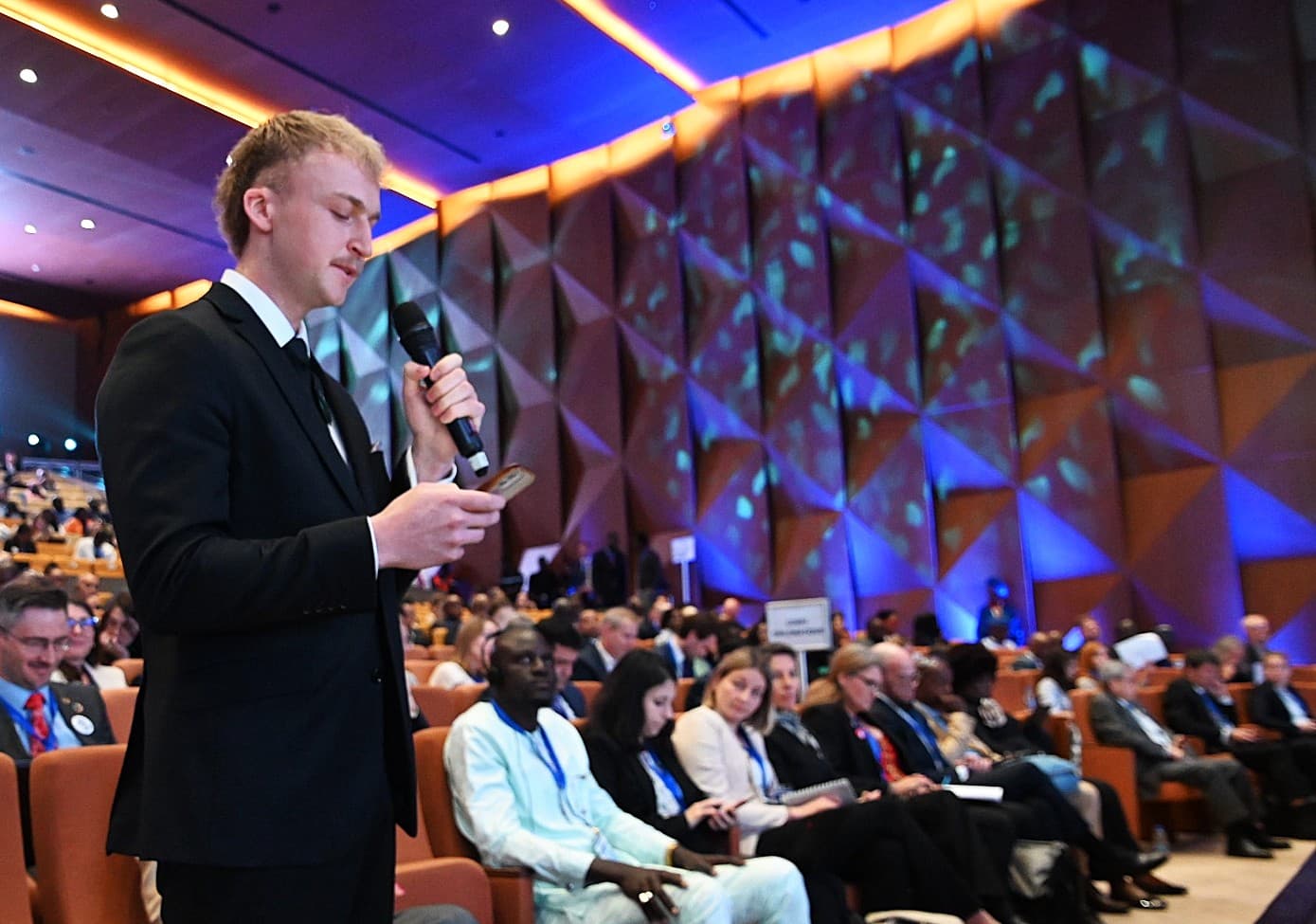
Ahead of Connor Redmile’s attendance at World Water Week in August, this article reflects on his earlier participation in United Nations preparatory meetings in Dakar, and the opportunities this created to build relationships, contribute Indigenous-led freshwater perspectives, and connect TKTP’s work with wider global water discussions.
Earlier this year, Te Kura Taka Pini Scientific Advisor Connor Redmile (Ōtākou, Moeraki) participated in two high-level United Nations preparatory meetings in Dakar, Senegal, which helped shape the global water agenda ahead of the 2026 UN Water Conference.
The meetings, held from 25 to 27 January, brought together ministers, UN agencies, scientists, Indigenous representatives and civil society organisations to help define priorities for the 2026 UN Water Conference.
More than 2,000 stakeholders attended the sessions in Dakar, with hundreds more participating across plenary discussions, side events and stakeholder meetings. The conference marked a critical milestone in advancing global cooperation on Sustainable Development Goal 6: clean water and sanitation for all.
As Stakeholder Rapporteur for the multilateral Interactive Dialogue on Enablers, one of the main stakeholder discussions focused on how to accelerate progress on clean water and sanitation, Connor reported back on key insights from the discussions and workshops held during the opening day of the programme.
Connor says the event was significant not only for the opportunity to contribute Indigenous knowledge and perspectives to global water discussions, but also to build relationships with other experts and share knowledge.
“Global water discussions influence many of the water governance arrangements and mechanisms that New Zealand employs. International engagement helps Ngāi Tahu build the credibility and relationships needed to have a stronger voice in decisions that affect our freshwater at home, making it harder for those perspectives to be overlooked.”
“Dakar was an important opportunity to build new relationships with other experts, who we can learn from to improve our own ways of managing water resources. A highlight for me was connecting a network of likeminded Indigenous experts.”
For Te Kura Taka Pini, participation reinforces the importance of engaging internationally on freshwater issues that increasingly transcend national boundaries. It also supports opportunities to learn from international approaches, build Indigenous expert networks and share Ngāi Tahu perspectives where appropriate.
Outcomes from the Dakar preparatory meetings will inform the structure, themes and expected commitments of the 2026 UN Water Conference, helping set the direction for international water policy at a time when progress on SDG 6 remains off track worldwide.
“It is important that we build on the momentum generated in these preparatory meetings to ensure positive outcomes for Māori and Indigenous Peoples globally. This year will have a significant influence in shaping the coming decade, so it is important that we establish the right mechanisms and approaches to enable improved water outcomes for us and our children after us.”
Connor says there are further opportunities for Ngāi Tahu to continue shaping the pathway forward in the lead up to the conference, but reiterated the need for Māori and other Indigenous Peoples to have a more active role in decision-making.
“Indigenous Peoples have been involved in these processes for a long time and have fought to have our voices heard, but it is time for the decision-making authority to be shared. We must let Indigenous Peoples shape what the collaborative process is. If authority is not shared, then the inequalities that created the water challenges we face today will continue to perpetuate.”